
ADHD Hyperfocus and Flow: When Being Absorbed Stops Feeling Like a Choice — an article by Carl Argent
ADHD Hyperfocus and Flow: When Being Absorbed Stops Feeling Like a Choice
You can be deeply absorbed and still feel stuck. Explore hyperfocus, flow and how ADHD coaching can help you understand your interest, attention and ability to pause.
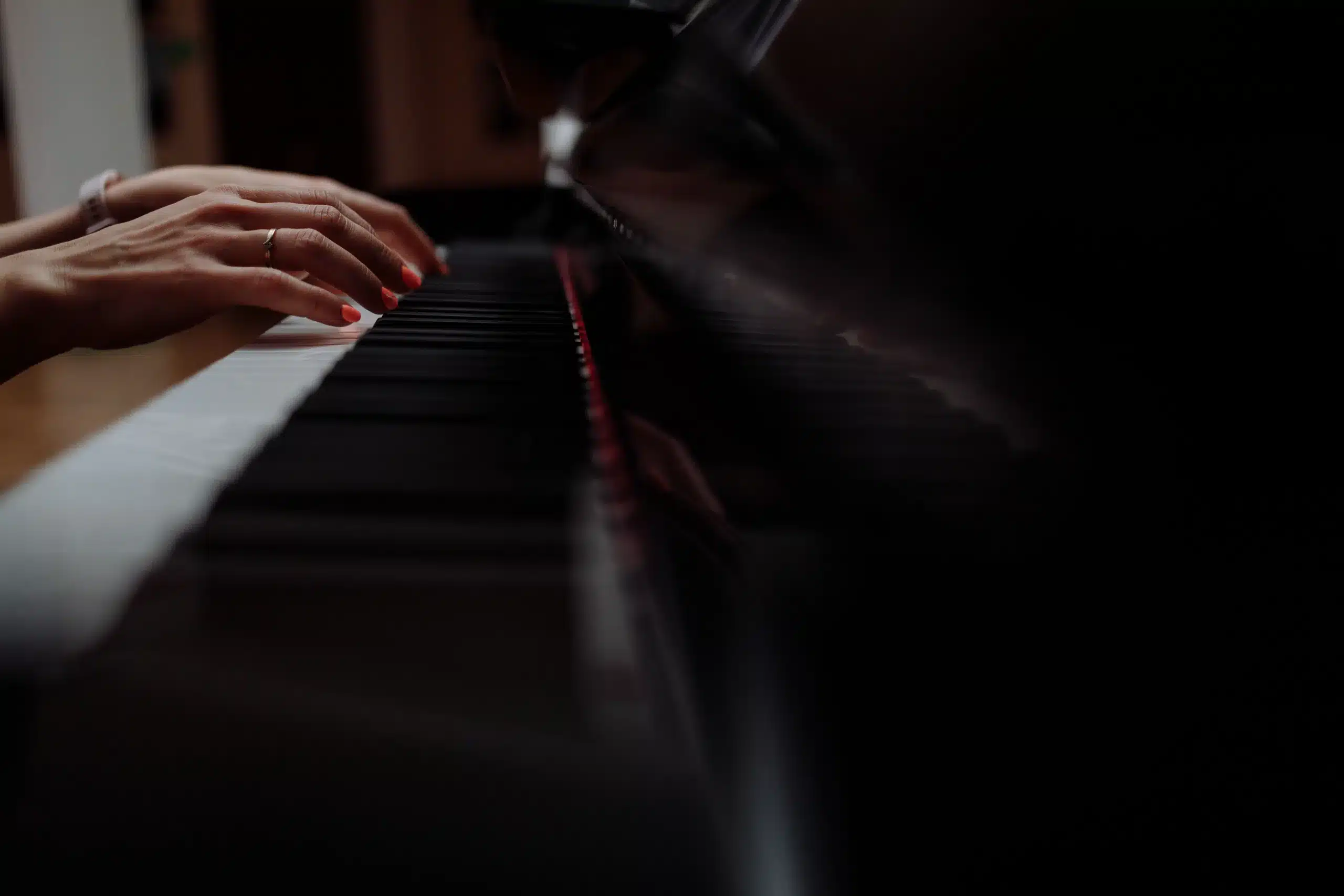
Hours disappear, but does it feel good?
You sit down to investigate one small part of a project. Later, you look up and the afternoon has gone. You have made progress, perhaps even something you are proud of. You have also missed lunch, ignored a message and left the task you intended to do untouched.
On another day, you become absorbed in making, learning or solving something. The challenge holds you, your next move makes sense and the activity feels satisfying in itself.
Both can look like impressive concentration from the outside. From the inside, the experience may be quite different. That difference matters if you want your attention to support your life, including the parts that are not immediately interesting.
What people mean by hyperfocus
Hyperfocus usually describes unusually intense absorption, with much less awareness of time or what is happening around you. Some adults with ADHD recognise it in work, hobbies, games or subjects that catch their interest.
It can be useful. You may learn a great deal, solve a difficult problem or make something that matters to you. The difficulty may be in directing that focus towards the intended task, starting it when needed or shifting away when something else needs your attention.
You might feel highly capable within an activity while having little sense of control over how long you remain there. Hyperfocus is not a diagnostic test for ADHD, and people without ADHD report intense absorption too.
What flow adds to the picture
Flow describes a rewarding experience of being fully involved in an activity. The challenge stretches you without overwhelming your skills. There is a clear next goal and enough feedback to tell how you are doing. You are absorbed in the activity itself, with less self-consciousness and a sense of being able to meet its demands.
Think of practising a piece of music that is just within reach. You hear where a phrase works, adjust and try again. Your attention follows the task, and working with it feels satisfying.
Positive Psychology takes this kind of engagement seriously because wellbeing includes being involved in life, as well as feeling cheerful or achieving an outcome. Absorption can have value even when nothing is produced for someone else.
Why the two are so often confused
Time can pass unnoticed in both. Both can involve deep concentration and reduced awareness of distractions. The words have also grown within different conversations: hyperfocus is often discussed around ADHD, while flow is discussed around enjoyment, skill and wellbeing.
The research does not draw one settled boundary. Some researchers have emphasised the overlap; others have found differences in reported control and enjoyment. Studies use different definitions, so a neat checklist would claim more certainty than we have.
For your own life, the useful questions are about the experience and its consequences. Was the activity rewarding? Were you moving towards something you chose? Did you feel engaged, or increasingly unable to leave? What happened to the rest of your day?
Choice matters, but flow is not an on-switch
A sense of control is part of how flow is usually described. That does not mean you can simply choose to enter it, or that losing track of time proves you have no agency. Conditions can make flow more likely; they cannot guarantee it.
It also helps to separate feeling in control of a task from being able to stop doing it. You might know exactly how to solve the next problem and still struggle to switch to making dinner. A recent small interview study found this combination in adults who described hyperfocus, alongside both useful and difficult consequences.
In coaching, I am interested in where more choice is possible: before you begin, at a planned pause and when you decide whether to return. You do not have to name every episode correctly before we can work with it.
Why “superpower” can miss the experience
Calling hyperfocus a superpower can sound encouraging, particularly after years of criticism. But the label can overlook what it costs when you cannot direct it, when basic needs disappear from view or when you are exhausted afterwards.
It can also create a new demand: if this is your special ability, why can you not use it for the overdue form? Being absorbed in something interesting does not mean you can summon the same attention for something necessary.
You are allowed to value your concentration and still need support with it. Your strengths belong to you; they do not have to prove that ADHD is either wholly an advantage or wholly a difficulty. Useful output is only one part of the picture.
Find out what your interest is responding to
Think of a recent activity that drew you in. Was it discovery, making something, solving a problem, understanding a person, competition or a clear challenge? Look at what you were doing rather than assuming an entire hobby or job always interests you.
You may love imagining possibilities but lose interest in completing the details. You may enjoy learning until a task becomes repetitive. You might stay with something because leaving it unfinished feels uncomfortable, even after the enjoyment has faded.
Then compare an activity you could not begin. Was the first step unclear? Was it too easy, too demanding or far removed from any visible result? Were you tired, anxious or interrupted? These distinctions give us something specific to work with.
Interest is useful information, not an obligation to follow every pull. A compelling task may still be the wrong task for that moment.
Build a way to pause and return
Awareness does not have to mean monitoring yourself every second. Before starting, you could write down what you intend to do, what a useful stopping point would be and what needs protecting afterwards.
Choose a pause cue you are likely to notice. For some people that may be an alarm across the room, an agreed check-in or a calendar event linked to the next activity. A cue only helps if it reaches you and gives you a workable next move.
At the pause, notice whether you are still enjoying the activity, whether your body needs something and whether continuing fits your priorities. Leaving a brief note about your next step may make stopping feel less like losing the work.
If the cue does not help, that tells us something about the support needed. The aim is to make transitions more workable, rather than add another reason to criticise yourself.
How I can help
My ADHD coaching combines a person-centred approach with Positive Psychology. I can help you build a clearer picture of when your attention feels interested and useful, when it becomes difficult to shift and what happens when interest is absent. We start with your actual experience, with or without a diagnosis.
We might map two recent examples together: a time you felt absorbed and a time you could not get started. I will help you identify the strengths and conditions involved, separate interest from pressure, and choose one practical change to test. That could mean making a goal clearer, adjusting the challenge, arranging feedback or building a stopping and restarting plan.
You can leave with an experiment shaped around your life, and we review what happens to your progress, energy, self-trust and relationships. I will help you notice useful patterns without expecting you to control attention perfectly or turn every difficulty into a strength.
Perhaps there is one activity you love getting lost in, but a part of life you keep losing along with it. That is something we can explore in ADHD coaching. We would look at what you want to keep, what needs protecting and how to recognise the point where absorption stops helping. You can book a free introductory conversation, with no obligation to book sessions, or read more about ADHD coaching with me.
Sources and further reading
Hupfeld, K. E., Abagis, T. R., & Shah, P. (2019). Living “in the zone”: hyperfocus in adult ADHD.
Ashinoff, B. K., & Abu-Akel, A. (2021). Hyperfocus: the forgotten frontier of attention. A review of definitions and the possible overlap with flow.
Grotewiel, M. M., and colleagues. Experiences of hyperfocus and flow in college students with and without ADHD.
Bowen, A., & Horlin, C. (2026). Absorbed, Trapped, or Lost? A qualitative investigation of hyperfocus experiences in ADHD adults. Interviews with seven UK adults; a small exploratory study, not a universal account.
University of Pennsylvania Positive Psychology Center. Engagement and flow as aspects of wellbeing.
Groen, Y., and colleagues (2020). Testing the relation between ADHD and hyperfocus experiences.
More ADHD and coaching reading
When Motivation Disappears: What Is Missing From Your Day?
Bring your question. Explore what comes next.
If you recognise the pull of an interesting task and the struggle to start or stop, we can explore what would make attention more workable in your life. In Shoeburyness, Southend-on-Sea, and online across the UK.
Explore ADHD coaching