
Understand who you are.
Choose what comes next.
You may have spent years doing what was expected, being the dependable one or working towards a version of success that once made sense. Now you want something to change, but you’re still working out what that means.
Coaching gives you space to understand yourself, choose a direction that fits and find a realistic next step. Then we learn from what happens when you try it.
Free no-obligation call · 30 minutes · Online by Google Meet.

Feeling secure. Finding room to thrive.
You may have learnt to stay safe by meeting expectations, avoiding mistakes or putting everyone else first. Those habits can make change feel risky. You might recognise some of these concerns:
- “I should be grateful for what I’ve got.”
- “People depend on me. My needs can wait.”
- “Changing direction would mean letting someone down.”
Alongside security, you may want more interest, meaning or enjoyment. Perhaps there is an idea, relationship or way of working you keep returning to, yet struggle to make room for.
Coaching gives both concerns a hearing. We explore what matters, the responsibilities you carry and a realistic step towards a life that fits you.
 Read the article
Why You Keep Playing It Safe: Security, Reward and the Life You Want
Why the safe option keeps winning, what you want to make room for and how to consider both before deciding.
Read the articleWhat matters to you? How could you put it into practice?
A direction can look sensible yet still feel like someone else’s idea of success. Explore your priorities and the strengths you could use to act on them. I can help you make sense of the results and connect them to the decision, goal or change you bring.
Explore your strengths
Reflect on the qualities you draw on across your life, including those you may overlook or find harder to express.
Explore your values
Use the Schwartz values assessment to notice your priorities and where different things you care about pull in different directions.
I can help you make sense of your results in a conversation shaped by what you need. You can begin without completing either tool.
Talk through your next stepFree introductory conversation, with no obligation to continue. These are reflective tools, not diagnoses. Reports include automatic reflections and are sent to you and me.Bring the situation you want to change.
You can arrive with a specific goal or a question you keep returning to. Whatever you bring, the work has the same shape: get clear on what you want, find more than one route to it, and build the confidence to act.
Should I stay or make a change?
Compare a job or life decision against your priorities, needs and practical constraints. Identify the information you still need and a next step that helps you decide.
I keep putting this off.
Choose one goal, find the point where you get stuck and design a smaller first action. Review what helps you begin and return when momentum drops.
I need to say something.
Prepare a difficult conversation or boundary. Work out what you want to communicate, practise the words and plan how to respond under pressure.
My week leaves no room for me.
Look at commitments, energy and what gets crowded out. Test a realistic change that creates more room for work, relationships, interests or rest.
From going in circles to choosing a direction.
This is one coaching client’s account, shared with permission. The name and identifying details are shortened to protect privacy; it is an individual experience, not a promised result.
“I’d been going round in circles about changing careers for nearly two years and kept postponing the decision. Through coaching, I chose a clear direction and applied for three roles, accepting one within six weeks. I still use the decision-making framework Carl introduced whenever I feel pulled between what I should do and what genuinely matters to me. Carl helped me challenge myself without ever feeling pushed.”
– Sarah, 38, teacher
Start with one conversation – or one session.
You do not need to choose a programme before we have spoken. Begin with a free 30-minute conversation, or book one 60-minute coaching session for £85. Decide afterwards whether another session or a six-session programme would be useful.
Free coaching conversation
Tell me what feels stuck, ask questions and decide whether coaching – and working together – feels like a useful fit. There is no obligation to book afterwards.
One coaching session
Bring one decision, goal or recurring obstacle. We use the time to understand what is keeping it in place and agree a next step you can test. Book another only if it would be useful.
If a different focus fits better: ADHD coaching, executive coaching and Life After Therapy remain available as clearly contracted specialist options. We can discuss them after understanding what you need; you do not have to work out the right service alone.
Understand yourself. Choose your direction. Put it into practice.
You set the agenda. I listen closely, ask questions, offer respectful challenge and introduce practical tools where they fit. We do not force a fixed formula onto your life.
Understand what shapes your choices
We separate what matters to you from pressure, assumptions and other people’s expectations, and notice the strengths you can draw on.
Choose your own direction
What does success mean to you now? We turn the answer into one realistic step to test in your real week: meaningful and manageable, not another demand to perform perfectly.
Practise it and learn
That might mean setting a boundary, having a conversation or exploring a career move. We review what happened without treating difficulty as failure, and keep what helps.
Psychological understanding. Clearly contracted coaching.
I am an Association for Coaching Accredited Coach and a qualified integrative counsellor. That background helps me notice the emotional, relational and social context around change without assuming that every difficulty needs to become therapy.
Coaching remains forward-looking and practical: we agree the focus, work towards change you have chosen and review what happens.
If the main need is to process emotional pain, loss, trauma or relationship difficulties, I will say so openly and we can consider whether counselling or another form of support would be more appropriate.
How I work: the agenda is yours, challenge is respectful and any tool is offered rather than imposed.
Begin with one. Continue only if it helps.
Coaching is contracted separately from counselling and is available in person or online. A 60-minute session is £85. You can book one session without committing to a programme; the six-session option is there when continuity and a structured review would be useful.
Sessions as you go
Use one session for a decision, difficult conversation or next-step plan. Book another when it would add value, with no package commitment.
The Coaching Programme
A mapping session, four working sessions and a review. Includes a strengths profile, a one-page plan, tested Next Step plans and a written review. Paid in full, it saves £30 on six single sessions (£60 on the 90-minute option).
Not sure which fits? Book a free 30-minute coaching conversation
Common questions about coaching.
What is coaching?
Coaching is a collaborative, forward-looking process. We clarify what matters, understand what is keeping a pattern in place and turn that understanding into action you can test in your own life or work.
Who is this coaching for?
It is for adults who want to turn understanding into action. You may be questioning familiar expectations, weighing a change in life or work, or wanting support with a decision, conversation or goal.
How is coaching different from counselling?
Coaching focuses mainly on chosen goals, decisions and future action. Counselling may be more suitable when the main need is to process emotional pain, loss, trauma or relationship difficulties. We can discuss the boundary openly; you do not have to decide alone.
Do I need a clear goal?
No. Feeling stuck, uncertain or aware that something needs to change is enough. Clarifying what you want can be part of the work.
Do I have to book six sessions?
No. You can begin with one 60-minute session for £85 and decide afterwards. The six-session programme is optional.
Can we meet online or in person?
Yes. I work in person from Shoeburyness, Southend-on-Sea, and online by Google Meet across the UK. You can mix the two formats.
Coaching is separate from therapy.
Therapy can offer space to understand emotional pain, work through the past and grow towards what matters to you. Coaching focuses on a change, decision or goal you want to pursue. Both begin with an empathic conversation; we agree the purpose so the support fits your needs.
Within coaching, you can explore these starting points:
- ADHD coaching when organisation, starting or follow-through is the main obstacle.
- Executive coaching for leadership responsibility and workplace decisions.
- Life After Therapy for putting new understanding into everyday practice once therapy has ended.
- Clarity Session one focused conversation about a single decision.
You do not have to choose alone. We can talk it through in the free conversation.
Reading for your coaching goals.
Explore being yourself, balancing pleasure and purpose, and finding the conditions that help you feel motivated.
 Confidence
Why Confidence Comes and Goes: How It Is Actually Built
Why confidence rises and falls from one day to the next, and what tends to build the kind that lasts: small real tests, more than one route forward, and being on your own side.
Read the article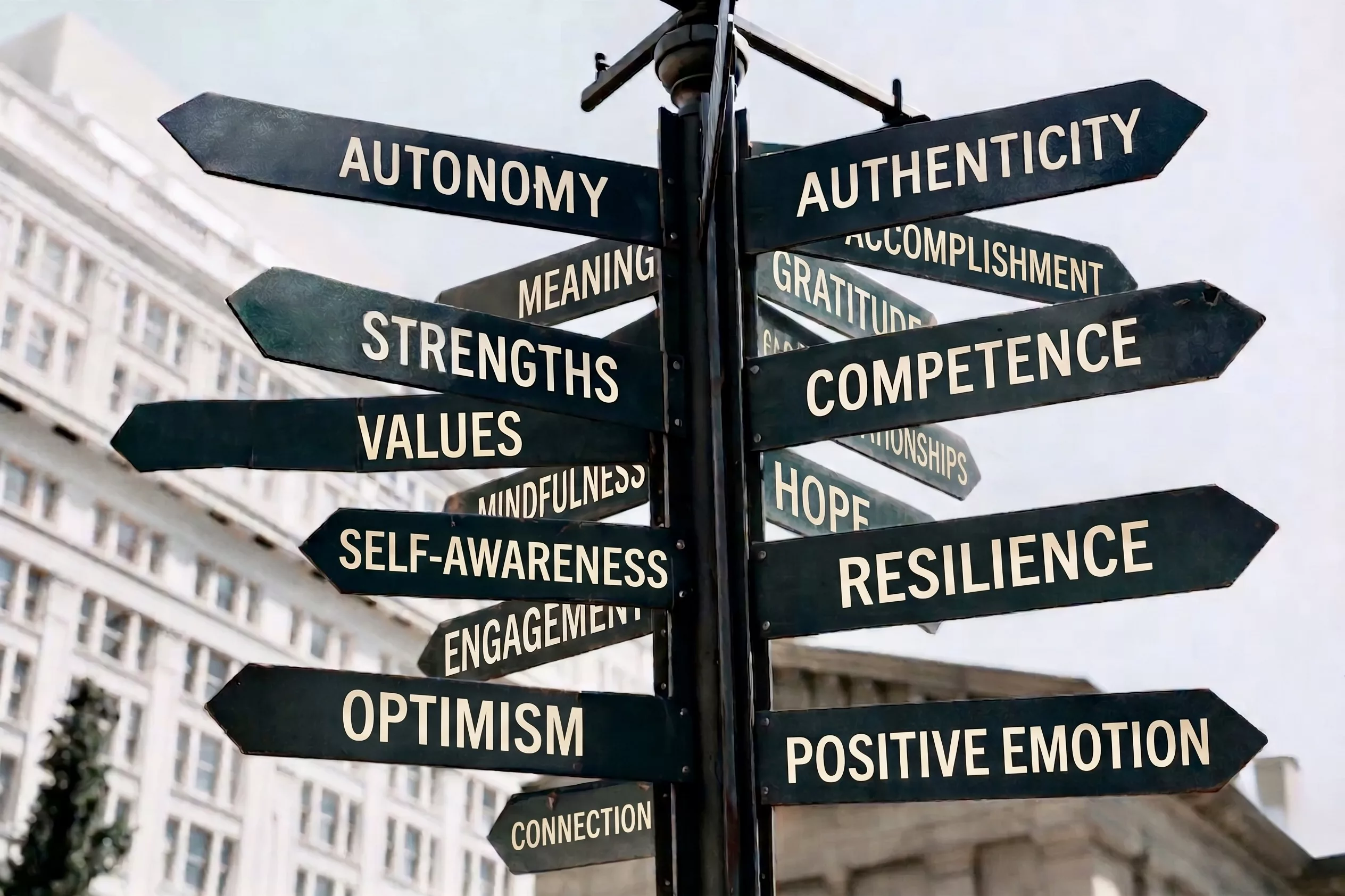 Strengths and hope
Why Knowing Your Strengths Matters More Than Fixing Your Weaknesses
Why leading with what you do well works better than fixing what you do not, and how coaching turns a strengths profile into a plan.
Read the article Authenticity and direction
Becoming Yourself: When Your Life No Longer Feels Like Yours
Explore the gap between what you feel and how you live, and how small, honest choices can help your life feel more like your own.
Read the articleWhat would you like to choose for yourself?
You don’t need a clear goal before we speak. In a free 30-minute conversation, we can explore what feels unsettled, answer your questions and see whether working together feels right.